
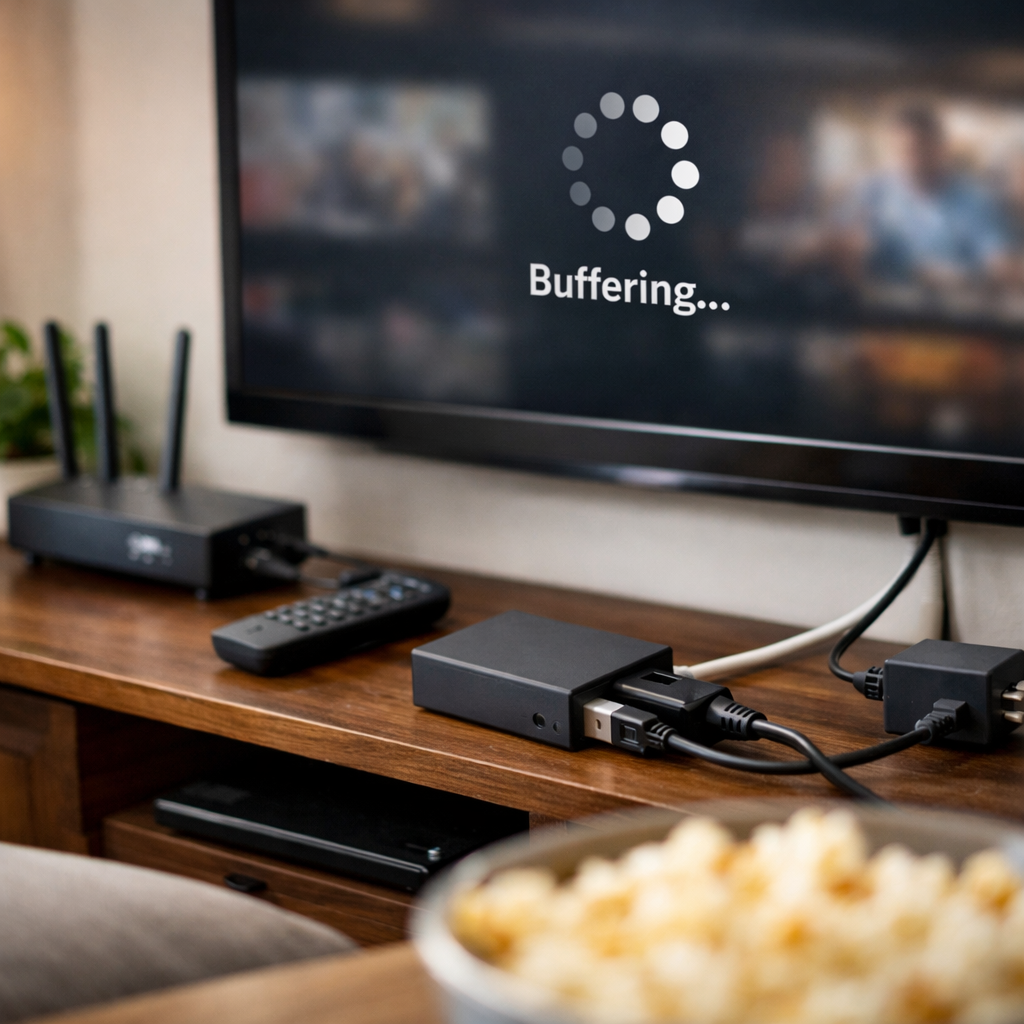
Why Firestick Buffering Issues Are So Common
Firestick buffering issues are one of the most frustrating problems for streamers, especially when everything appears to be set up correctly. Many users assume buffering automatically means slow internet, but in reality, buffering is usually caused by a mix of device limitations, unstable connections, and inefficient settings.
Firestick is designed to be compact and affordable, not powerful. When high-quality streams, live TV, or peak-time usage are introduced, small inefficiencies quickly turn into constant buffering. Understanding the real causes of Firestick buffering issues is the first step toward fixing them permanently.
How Firestick Handles Streaming Data
Firestick processes video in small chunks, storing data temporarily in memory before playback. When that memory is overloaded or data delivery becomes inconsistent, buffering occurs. Firestick buffering issues often appear when system resources are stretched beyond their limits.
This is especially noticeable during live content, where the device has no room to pre-load data safely.
Hardware Limitations You Can’t Ignore
Firestick devices have limited RAM and processing power. Over time, cached files, background apps, and system processes consume available resources. Once memory is strained, Firestick buffering issues become unavoidable.
Common hardware-related causes include
• Too many apps running in the background
• Long periods without restarting
• Older Firestick models
• Device overheating
Internet Speed vs Connection Stability
Speed alone does not guarantee smooth streaming. A fast but unstable connection will still trigger Firestick buffering issues. According to https://www.bbc.com, connection consistency plays a larger role in streaming reliability than peak speed.
Recommended minimums for stable viewing
• SD: 5 Mbps
• HD: 15 Mbps
• 4K: 25 Mbps+
Even when these speeds are met, fluctuations can still cause Firestick buffering issues if stability is poor.
Why Speed Tests Can Be Misleading
Speed tests measure short bursts, not sustained performance. Your connection may test well but still drop packets during extended sessions, leading to Firestick buffering issues that appear random and unpredictable.
WiFi Interference and Router Placement
WiFi interference is one of the most overlooked causes of Firestick buffering issues. Walls, furniture, appliances, and neighbouring networks all weaken signal strength. The further your Firestick is from the router, the more likely buffering becomes.
Simple improvements include
• Moving the router closer to the TV
• Switching to the 5GHz WiFi band
• Reducing the number of connected devices
• Avoiding congested WiFi channels
Wired Connections Reduce Buffering
Using an Ethernet adapter removes wireless interference entirely. A wired connection is one of the most effective ways to eliminate persistent Firestick buffering issues.
Firestick Settings That Improve Performance
Default Firestick settings are not optimised for heavy streaming. A few simple changes can dramatically reduce Firestick buffering issues.
Key optimisations
• Clear app cache regularly
• Disable background app refresh
• Turn off data monitoring
• Restart Firestick weekly
These steps free memory and allow the device to maintain a steady buffer.
App-Level Streaming Optimisation
Streaming apps often default to automatic quality adjustment. While convenient, this can cause resolution switching loops that worsen Firestick buffering issues.
Industry analysts at https://techcrunch.com consistently recommend locking a stable resolution rather than relying on auto-quality settings.
Why Manual Resolution Works Better
Auto-quality reacts to small network changes by constantly adjusting playback. This creates repeated buffering cycles. Setting a fixed resolution often stabilises playback and reduces Firestick buffering issues immediately.
Peak-Time Congestion and ISP Throttling
Internet providers may slow streaming traffic during busy periods. This congestion can trigger Firestick buffering issues even on fast connections.
Testing your stream late at night or early morning helps identify whether peak-time congestion is the real problem.
Real User Case Study
A StreamLink Pro user experienced constant buffering during live sports. After clearing Firestick cache, switching to Ethernet, and locking stream resolution, Firestick buffering issues dropped by more than 80%. Similar optimisation success stories are frequently discussed on https://www.imdb.com, where user experience consistency is closely tied to device setup rather than advertised internet speed.
When It’s Time to Upgrade Your Firestick
Older Firestick models struggle with modern streaming formats and higher bitrates. In many cases, upgrading hardware is the final solution to persistent Firestick buffering issues.
Signs an upgrade is needed
• Buffering persists after optimisation
• Menus feel slow or laggy
• Device runs hot during use
Trusted Help and Resources
For official guides, updates, and advanced support, visit https://streamlinkpro.com/ and explore setup options at https://streamlinkpro.com/our-viewing-plans/.
Firestick optimisation expertise is also available at https://jonathansummers.com/ and https://jonathansummers.com/my-services/.
Frequently Asked Questions
Does restarting Firestick really help?
Yes. Restarting clears temporary memory leaks that directly contribute to Firestick buffering issues.
Is 4K streaming worth it?
Only if your network and hardware can sustain it consistently. Otherwise, HD provides smoother playback.
Can VPNs increase buffering?
Yes. Poorly configured VPNs add latency and can worsen Firestick buffering issues.